Home / Courses / Engineering

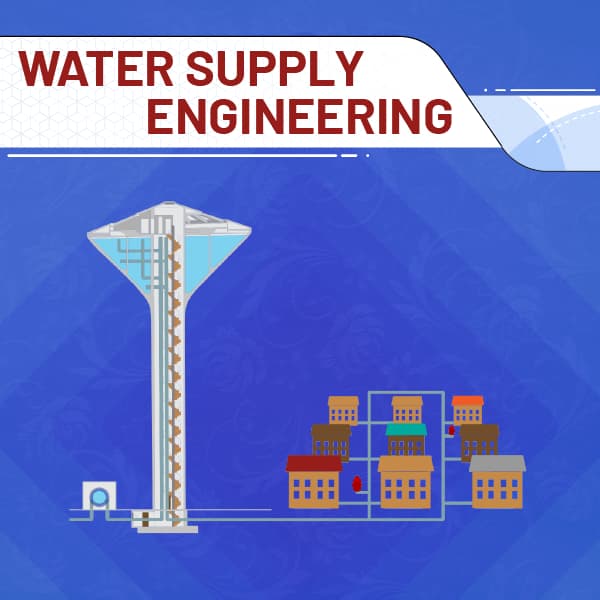
Water Supply Engineering @ 45 Days

Water Supply Engineering Bachelor of Engineering(BE) videos According to syllabus of Institute of Engineering(IoE), Tribhuvan University (TU)

Intermediate
5.0 (3 reviews)
250+ Students Enrolled Nepali Updated Oct 2024

What you'll learn

After the completion of this course, students will get the complete knowledge of Water Supply Engineering.
Course Curriculum 10 Sections • 209 Lectures
Free Preview Available: Watch "1. Introduction to Water Supply Engineering.mp4" before enrolling.
1. Introduction to Water Supply Engineering.mp4 Free Preview
00:08:35
2. Types of Water and Objective of Water Supply.mp4 Free Preview
00:06:22
3. Historical Development of Water Supply System.mp4
00:05:11
4. Schematic Diagram of Water Supply System.mp4
00:11:17
5. Components of Water Supply System.mp4
00:11:25
1. Introduction to Sources of Water.mp4
00:04:51
2. Surface Sources.mp4
00:08:08
3. Capacity Determination of Impounded Reservoir.mp4
00:04:39
4. Numerical 1(Impounded Reservoir).mp4
00:06:27
5. Ground Water Sources (Aquifer).mp4
00:05:09
6. Ground Water Sources (Well).mp4
00:04:31
7. Infiltration Galleries and Wells.mp4
00:06:04
8. Spring and its Types.mp4
00:07:36
9. Selection of Water Sources.mp4
00:06:29
1. Introduction.mp4
00:05:49
2. Design and Base Period.mp4
00:06:36
3. Types of Water Demand.mp4
00:07:38
4. Types of Water Demand, Continued.mp4
00:06:13
5. Variation in Water Demand.mp4
00:06:40
6. Factor Affecting Demands of Water.mp4
00:05:39
7. Population Forecasting Method (Arithmatical Increase Method).mp4
00:04:58
8. Numerical 1 (Arithmatical Increase Method).mp4
00:05:50
9. Geometrical Increase Method.mp4
00:03:29
10. Numerical 2 (Geometrical increase Method).mp4
00:05:40
11. Incremental Increase Method.mp4
00:04:08
12. Numerical 3 (Incremental increase Method).mp4
00:06:31
13. Decrease Rate of Growth Method.mp4
00:05:47
14. Numerical 4 ( Decrease Rate of Growth Method).mp4
00:09:25
15. Numerical 5 (Current Population).mp4
00:06:48
16. Numerical 6 (Total Water Demand).mp4
00:09:20
17. Numerical 6 (Total Water Demand), part2.mp4
00:04:33
1. Impurities Present in Water.mp4
00:07:20
2. Hardness.mp4
00:05:39
3. Alkalinity.mp4
00:07:07
4. Numerical on Hardness and Alkalinity.mp4
00:04:27
5. Living Organism in Water, Part1.mp4
00:07:09
6. Living Organism in Water, Part2.mp4
00:09:07
7. Water Related Diseases.mp4
00:06:19
8. Diesease Trasmission Route.mp4
00:05:01
9. Examination of Water.mp4
00:07:21
10. Physical Examination.mp4
00:07:11
11. Chemical examination.mp4
00:09:12
12. Biological Examination.mp4
00:06:04
13. Multiple Tube Fermentation Technique.mp4
00:05:11
14. Water Quality Standard.mp4
00:05:11
1. Intake and its Site Selection.mp4
00:10:02
2. Classification of Intake (Dry intake, Submerged and Exposed intake).mp4
00:06:56
3. Wet Intake and River Intake.mp4
00:05:48
4. Reservoir and Spring Intake.mp4
00:09:22
1. Introduction and Objective of Water Treatment.mp4
00:08:06
2. Treatment process and Impurity Removal.mp4
00:10:50
3. Screening.mp4
00:07:09
4. Plain Sedimentation.mp4
00:11:04
5. Derivation for Settling Velocity of Discrete Particles, part1.mp4
00:06:21
6. Derivation for Settling Velocity of Discrete Particles, part2.mp4
00:06:48
7. Derivation for Settling Velocity of Discrete Particles, part3.mp4
00:05:57
8. Temperature effect on Settlement and Newton Equation.mp4
00:06:05
9. Numerical 1. Settling Velocity.mp4
00:07:30
10. Ideal Sedimentation Tank.mp4
00:05:36
11. Types of Sedimentation Tank.mp4
00:10:09
12. Relation Between Settling Velocity and SOR.mp4
00:09:23
13. Efficiency of Sedimentation Tank.mp4
00:06:55
14. Design Criteria for Plain Sedimentation Tank.mp4
00:10:30
15. Numerical 1. (Design of Sedimentation Tank).mp4
00:12:45
16. Numerical 2. (Design of Sedimentation Tank).mp4
00:09:45
17. Numerical 3. (Efficiency of Sedimentation Tank).mp4
00:09:12
18. Sedimentation with Coagulation.mp4
00:05:55
19. Common Coagulants.mp4
00:10:10
20. Mixing Devices.mp4
00:06:41
21. Mixing Basin with Mechanical Means.mp4
00:03:53
22. Mixing Channel, Hydraulic Jump e.t.c.mp4
00:05:47
23. Flocculation Tank.mp4
00:04:44
24. Clarifier.mp4
00:05:24
25. Jar Test.mp4
00:07:38
26. Filtration and its Theory.mp4
00:11:54
27. Slow Sand Filter (Components).mp4
00:16:32
28. Slow Sand Filter (Working, Cleaning and Efficiency).mp4
00:08:01
29. Design Criteria of Slow Sand Filter.mp4
00:06:54
30. Numerical 4. (Design of Slow Sand Filter).mp4
00:11:22
31. Rapid Sand Filter (General Introduction and Its Components).mp4
00:10:20
32. Rapid Sand Filter (Working,Cleaning and Efficiency).mp4
00:13:21
33. Rapid Sand Filter (Design Criteria).mp4
00:04:56
34. Numerical 5. Design of Rapid Sand Filter.mp4
00:09:51
35. Pressure Filter.mp4
00:07:24
36. Numerical 6. Design of Pressure Filter.mp4
00:06:31
37. Disinfection.mp4
00:03:51
38. Chlorination.mp4
00:08:41
39. Basic Terms of Chlorination.mp4
00:08:25
40. Types of Chlorine.mp4
00:07:43
41. Forms of Chlorination.mp4
00:08:13
42. Break Point Chlorination (1).mp4
00:11:22
42. Break Point Chlorination.mp4
00:11:22
43. Super and Dechlorination.mp4
00:05:04
44. Factor Affecting Efficiency of Chlorination.mp4
00:08:43
45. Numerical 7. Chlorination.mp4
00:04:38
47. Softening.mp4
00:07:42
48. Removal of Permanent Hardness.mp4
00:05:51
49. Zeolite Method.mp4
00:10:22
50. Advantages and Disadvantages of Zeolite Method.mp4
00:05:32
51. Ionization Method.mp4
00:05:35
52. Miscellenous Treatment.mp4
00:04:25
53. Method of Aeration.mp4
00:05:05
54. Method of Aeration,part 2.mp4
00:03:06
55. Removal of Iron and Manganese.mp4
00:04:48
56. Removal of Colour Odour and Taste.mp4
00:09:06

1. Introduction and System of Water Supply.mp4
00:10:39
2. Requirements of Good Distribution System.mp4
00:03:14
3. Reservoirs and Types.mp4
00:08:37
4. Types of Service Reservoir.mp4
00:09:12
5. Storage Capacity of Service Reservoir.mp4
00:10:26
6. Numerical 1. Storage Capacity of Reservoir (Both Continuous).mp4
00:15:14
7. Numerical 2. Storage Capacity (Inflow Continuous Outflow Intermittent).mp4
00:14:53
8. Numerical 3. Storage Capacity (Inflow Intermittent Outflow Continuous).mp4
00:13:20
9. Numerical 4. Storage Capacity (Inflow and Supply both Intermittent).mp4
00:09:52
10. Layout of Distribution System.mp4
00:07:51
12. Design of Distribution System.mp4
00:08:14
13. Head Losses in Pipe Lines.mp4
00:07:05
14. Head Losses in Pipe Lines (Manning's Equation).mp4
00:03:34
15. Minor Head Losses.mp4
00:06:38
16. Design Criteria of Distribution System.mp4
00:09:17
17. Design Steps Of Distribution System.mp4
00:08:07
18. Design of Pipe Network (Branch System).mp4
00:04:33
19. Numerical 5. Pipe Design Using Branch System ,part1.mp4
00:14:31
20. Numerical 5. Pipe Design Using Branch System ,part2.mp4
00:07:54
21. Numerical 5. Pipe Design Using Branch System ,part3.mp4
00:07:22
22. Looped System.mp4
00:05:49
23. Head loss through Pipeline in Series.mp4
00:05:54
24. Head Loss through Pipeline in Parallel.mp4
00:15:19
25. Hardy Cross Method.mp4
00:03:51
26. Balancing Head by Correcting Flow.mp4
00:10:26
27. Numerical 6. Pipe Design Using Hardy Cross Method, part1.mp4
00:09:06
28. Numerical 6. Pipe Design Using Hardy Cross Method, part2.mp4
00:10:11
29. Numerical 6. Pipe Design Using Hardy Cross Method, part3.mp4
00:06:39
30. Numerical 6. Pipe Design Using Hardy Cross Method, part4.mp4
00:06:53
1. Introduction.mp4
00:08:23
2. Types of Pipe Material (C.I and G.I Pipes).mp4
00:07:03
3. Types of Pipe Material (Steel and PVC Pipes).mp4
00:06:18
4. Types of Pipe Material (D.I and Concrete Pipes).mp4
00:07:45
5. Pipe Joints.mp4
00:06:03
6. Types of Pipe Joints.mp4
00:05:51
7. Laying of Pipe Lines.mp4
00:08:46
1. Valve, Its Use and Types.mp4
00:08:54
2. Reflux and Air Release Valve.mp4
00:04:17
3. Fitting and Its Types.mp4
00:07:58
4. Water Meter and BPT.mp4
00:05:10
5. Public Stand Post.mp4
00:08:39
6. Maintenance of Water Supply System.mp4
00:10:20
2076 Ashwin|Q.no. 1.mp4
00:05:30
2076 Ashwin|Q.no. 2.mp4
00:02:53
2076 Ashwin|Q.no. 3.mp4
00:09:21
2076 Ashwin|Q.no. 4.mp4
00:04:59
2076 Ashwin|Q.no. 5.mp4
00:06:45
2076 Ashwin|Q.no. 6.a.mp4
00:04:55
2076 Ashwin|Q.no. 6.b.mp4
00:10:41
2076 Ashwin|Q.no. 6.c.mp4
00:07:14
2076 Ashwin|Q.no. 7.a.mp4
00:20:14
2076 Ashwin|Q.no. 8.mp4
00:03:17
2076 Ashwin|Q.no. 9.mp4
00:02:53
2076 Chaitra|Q.no. 1.mp4
00:01:51
2076 Chaitra|Q.no. 2.mp4
00:02:35
2076 Chaitra|Q.no. 3.mp4
00:10:51
2076 Chaitra|Q.no. 4.a.mp4
00:03:01
2076 Chaitra|Q.no. 4.b.mp4
00:04:09
2076 Chaitra|Q.no. 5.mp4
00:06:24
2076 Chaitra|Q.no. 6.a.mp4
00:07:15
2076 Chaitra|Q.no. 6.b.mp4
00:10:01
2076 Chaitra|Q.no. 7.a.mp4
00:04:58
2076 Chaitra|Q.no. 7.b.mp4
00:15:37
2076 Chaitra|Q.no. 8.mp4
00:05:17
2076 Chaitra|Q.no. 9.mp4
00:02:57
2078 Bhadra|Q.no. 1.mp4
00:02:32
2078 Bhadra|Q.no. 2.mp4
00:02:15
2078 Bhadra|Q.no. 3.mp4
00:12:38
2078 Bhadra|Q.no. 4.a.mp4
00:03:01
2078 Bhadra|Q.no. 4.b.mp4
00:05:19
2078 Bhadra|Q.no. 5.mp4
00:01:58
2078 Bhadra|Q.no. 6.a.mp4
00:06:57
2078 Bhadra|Q.no. 6.b.mp4
00:09:03
2078 Bhadra|Q.no. 6.c.mp4
00:04:31
2078 Bhadra|Q.no. 7.a.mp4
00:01:24
2078 Bhadra|Q.no. 7.b.mp4
00:08:33
2078 Bhadra|Q.no. 8.mp4
00:02:29
2078 Bhadra|Q.no. 9.mp4
00:02:49
2078 Kartik|Q.no. 1.mp4
00:01:06
2078 Kartik|Q.no. 2.mp4
00:03:05
2078 Kartik|Q.no. 3.mp4
00:14:32
2078 Kartik|Q.no. 4.a.mp4
00:02:27
2078 Kartik|Q.no. 4.b.mp4
00:06:15
2078 Kartik|Q.no. 5.mp4
00:03:48
2078 Kartik|Q.no. 6.a.mp4
00:09:27
2078 Kartik|Q.no. 6.b.mp4
00:06:38
2078 Kartik|Q.no. 6.c.mp4
00:05:19
2078 Kartik|Q.no. 7.a.mp4
00:01:53
2078 Kartik|Q.no. 7.b.mp4
00:08:52
2078 Kartik|Q.no. 8.mp4
00:02:10
2078 Kartik|Q.no. 9.mp4
00:01:00
2079 Baisakh|Q.no. 1.mp4
00:02:08
2079 Baisakh|Q.no. 2.mp4
00:04:29
2079 Baisakh|Q.no. 3.mp4
00:08:13
2079 Baisakh|Q.no. 4.a.mp4
00:02:01
2079 Baisakh|Q.no. 4.b.mp4
00:04:23
2079 Baisakh|Q.no. 5.mp4
00:04:09
2079 Baisakh|Q.no. 6.a.mp4
00:07:47
2079 Baisakh|Q.no. 6.b.mp4
00:07:56
2079 Baisakh|Q.no. 6.c.mp4
00:04:45
2079 Baisakh|Q.no. 7.a.mp4
00:11:09
2079 Baisakh|Q.no. 7.b.mp4
00:07:29
2079 Baisakh|Q.no. 8.mp4
00:02:02
2079 Baisakh|Q.no. 9.mp4
00:02:40

Requirements

  • Students are required to have knowledge of Fluid Mechanics and Hydraulics.

Course Description

The videos herein are strictly based on syllabus of Institute of Engineering Tribhuvan University, Nepal promoting "e-Learning in Nepal" and are made with intention to provide guidance to the "Bachelor in Engineering(BE) appearing students", for securing good results. The course tries to cover all the lessons of Water Supply Engineering, with most frequently asked questions and solutions in the final exam of BE. We strongly believe that, viewers will be benefited from these videos and the thirst of curiosity of viewers will be quenched! Feedbacks and suggestion to improve are always welcome and highly appreciated!

Instructor

M
Mero School Academic Team

Senior Academic Instructor • Mero School E-Learning