Home / Courses / Engineering

Power System Analysis I (BEL) @ 45 Days

Power System Analysis I(Power System) Bachelor of Engineering(BE) videos According to syllabus of Institute of Engineering(IoE), Tribhuvan University (TU)

Intermediate
5.0 (1 reviews)
250+ Students Enrolled Nepali Updated Mar 2025

What you'll learn

"After Completion of this Course, Students will get complete knowledge of Power System Analysis I, based on syllabus of IoE and will be able to secure good score in IoE exam."
Course Curriculum 7 Sections • 154 Lectures
Free Preview Available: Watch "1. Introduction of Contents.mp4" before enrolling.
1. Introduction of Contents.mp4 Free Preview
00:08:25
2. Power System Evolution.mp4 Free Preview
00:06:27
3. Generation, Transmission and distribution Concept.mp4
00:15:43
4. Advantage of three phase over 1-phase.mp4
00:04:59
5. Advantage of High Voltage Transmission line.mp4
00:07:48
6. Limitation of High Voltage.mp4
00:04:21
7. Main Energy Sources.mp4
00:18:07
8. Renewable Source of energy.mp4
00:18:26
9. Power System Components.mp4
00:19:04
10. HVAC and HVDC Transmission Mode of Power System.mp4
00:09:42
2078 baisakh 1.a.mp4
00:09:14
1. Contents.mp4
00:03:27
2. single phase represantation of three phase system.mp4
00:03:49
3. Single Line Diagram.mp4
00:04:39
4. Impedance and Reactance Diagram.mp4
00:04:52
5. Complex Power.mp4
00:05:51
6. Direction of Power Flow.mp4
00:12:09
7. Numerical Example-1.mp4
00:12:20
8. Per Unit System.mp4
00:07:51
9. Change of Base.mp4
00:06:12
10. Numerical example-2.mp4
00:16:55
11. Numerical example 3.mp4
00:16:01
12. Numerical Example-4.mp4
00:17:02
13. Advantage, Limitation and Application of Per Unit System.mp4
00:06:49
1. Introduction of contents.mp4
00:04:07
2. Line Inductance.mp4
00:03:12
3. Flux Linkage in a Conductor due to Internal flux.mp4
00:09:03
4. External Flux Linkage of a Conductor.mp4
00:05:00
5. Skin Effect and Proximity Effect.mp4
00:05:12
6. Inductance of Single Phase Two Wire Line.mp4
00:06:44
7. GMR Calcualtion (Numerical example-1).mp4
00:11:34
8. GMR Calculation (Numerical example-2).mp4
00:04:45
9. Flux Linkage of Conductor in a Group.mp4
00:08:54
10. Boundled Conductor.mp4
00:03:51
11. Inductance of Symmetrical Spacing between Conductor.mp4
00:06:05
12. Inductance of Three Phase Line for Unsymmetrical Spacing Between the Conductor.mp4
00:15:58
13. Inductance of Boundled Conductor.mp4
00:08:46
14. Numerical Example.mp4
00:12:53
15. Inductance of double Circuit three phase Line.mp4
00:05:48
16. Numerical Example-4.mp4
00:11:24
17. Capacitance of Line.mp4
00:04:41
18. Capcitance Between single phase two wire Line.mp4
00:08:11
19. Capacitance of 3-phase line in Symmetrical spacing.mp4
00:13:00
20. Numerical Example-5.mp4
00:04:52
21. Numerical Example-6.mp4
00:06:39
22. Capacitance considering effect of Earth.mp4
00:16:01
23. Numerical Example-7.mp4
00:08:10
1. Course Contents.mp4
00:03:09
2. Voltage Distribution across the discs in insulator string.mp4
00:08:00
3. String Effeciency.mp4
00:03:07
4. Numerical Example-4.mp4
00:07:54
5. Numerical example-2.mp4
00:09:21
6. Comparision of Overhead and Underground Line.mp4
00:06:37
7. Line Supports.mp4
00:07:29
8. Spacing between Conductor and Stranded Conductors.mp4
00:04:22
9. Overhead Line Insulator and its materials.mp4
00:07:55
10. Types Of Insulator.mp4
00:07:37
11. Construction of Underground Cable.mp4
00:06:20
12. Fundamental requirement of Insulating material used in cable (1).mp4
00:02:05
13. Classification of Cable.mp4
00:08:28
14. Numerical example-4.mp4
00:13:15
15. Insulation Resistance.mp4
00:02:49
16. Dielectric Stress in Cable.mp4
00:05:06
17. cables fault and location of fault.mp4
00:05:59
18. Murrary Loop test for location of fault.mp4
00:03:37
1. Introduction of Contents.mp4
00:02:24
2. Classification of Transmission Line.mp4
00:04:39
3. Short Transmission Line.mp4
00:05:53
4. Voltage Regulation of Short Transmission line.mp4
00:12:29
5. Numerical Example-1.mp4
00:09:17
6. Numerical Example-2.mp4
00:08:26
7. Nominal 'Pi' Model of Medium Transmission Line.mp4
00:12:06
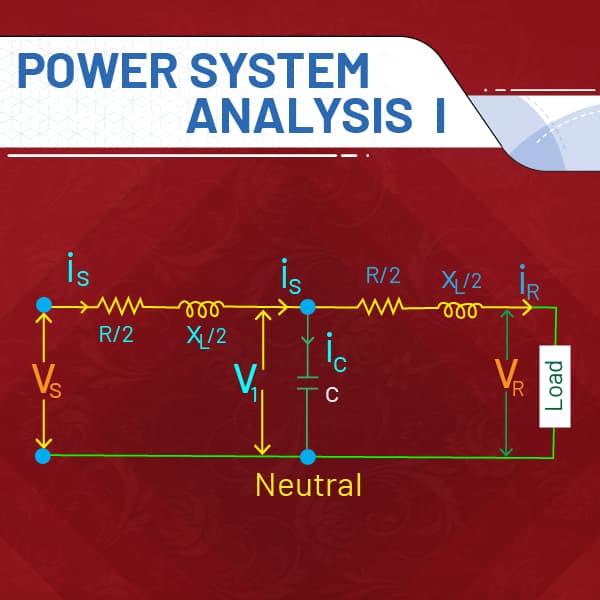
8. Nominal 'T' model of medium Transmission Line.mp4
00:06:31
9. Numerical Example-3.mp4
00:15:33
10. Numerical Example-4.mp4
00:14:37
11. Long Transmission Line.mp4
00:19:34
12. Equivalent pi model of Long Transmission Line.mp4
00:10:03
13. Equivalent 'T' Model of Long Transmission Line.mp4
00:07:43
14. Numerical Example-5.mp4
00:23:15
1. Introduction of Content.mp4
00:03:07
2. Power Flow Through Transmission Line.mp4
00:15:44
3. Power Angle Curve.mp4
00:16:19
4. Transmission Line as a Source and Sink of Reactive Power.mp4
00:08:55
5. Surge Impedance Loading.mp4
00:07:46
6. Ferranti Effect.mp4
00:09:23
7. Reactive Compensation of Transmission Line.mp4
00:05:32
8. Shunt Capacitor Compensation.mp4
00:04:23
9. Shunt Reactor Compensation.mp4
00:04:23
10. Series Capacitor Compensation.mp4
00:03:37
11. Synchronous Compensation.mp4
00:07:51
12. Numerical Example-1.mp4
00:05:55
13. Numerical example-2.mp4
00:11:56
2074 Bhadra|1(a).mp4
00:05:22
2074 Bhadra|1(b).mp4
00:05:05
2074 Bhadra|2(a).mp4
00:07:23
2074 Bhadra|2(b).mp4
00:06:32
2074 Bhadra|3(a).mp4
00:09:08
2074 Bhadra|3(b).mp4
00:15:01
2074 Bhadra|4(a).mp4
00:16:19
2074 Bhadra|4(b).mp4
00:10:11
2074 Bhadra|5(a).mp4
00:09:12
2074 Bhadra|5(b).mp4
00:11:26
2074 Bhadra|6(a).mp4
00:11:55
2074 Bhadra|6(b).mp4
00:09:06
2075 Baisakh|1(a).mp4
00:07:08
2075 Baisakh|1(b).mp4
00:05:14
2075 Baisakh|1(c).mp4
00:06:43
2075 Baisakh|2(a).mp4
00:06:26
2075 Baisakh|2(b).mp4
00:15:55
2075 Baisakh|2(c).mp4
00:04:04
2075 Baisakh|3(a).mp4
00:05:30
2075 Baisakh|3(b).mp4
00:04:24
2075 Baisakh|3(c).mp4
00:04:04
2075 Baisakh|4(a).mp4
00:06:07
2075 Baisakh|4(b).mp4
00:08:02
2075 Baisakh|4(c).mp4
00:12:05
2075 Baisakh|5(a).mp4
00:07:46
2075 Baisakh|5(b).mp4
00:04:53
2075 Baisakh|5(c).mp4
00:15:10
2075 Bhadra|1(a).mp4
00:07:20
2075 Bhadra|1(b).mp4
00:12:33
2075 Bhadra|2(a).mp4
00:09:43
2075 Bhadra|2(b).mp4
00:16:51
2075 Bhadra|3(a).mp4
00:06:11
2075 Bhadra|3(b).mp4
00:07:09
2075 Bhadra|3(c).mp4
00:07:28
2075 Bhadra|4(a).mp4
00:08:34
2075 Bhadra|4(b).mp4
00:14:52
2075 Bhadra|5(a).mp4
00:13:23
2075 Bhadra|5(b).mp4
00:09:45
2076 Baishak|1(a).mp4
00:04:42
2076 Baishak|1(b).mp4
00:03:35
2076 Baishak|1(c).mp4
00:09:02
2076 Baishak|2(a).mp4
00:07:33
2076 Baishak|2(b).mp4
00:14:11
2076 Baishak|3(a).mp4
00:07:28
2076 Baishak|3(b.mp4
00:14:16
2076 Baishak|4(a).mp4
00:16:02
2076 Baishak|4(b).mp4
00:05:47
2076 Baishak|5(a).mp4
00:06:22
2076 Baishak|5(b).mp4
00:06:01
2076 Bhadra|1(a).mp4
00:05:20
2076 Bhadra|1(b).mp4
00:09:12
2076 Bhadra|2.mp4
00:09:43
2076 Bhadra|3(a).mp4
00:05:50
2076 Bhadra|3(b).mp4
00:04:50
2076 Bhadra|3(c).mp4
00:18:13
2076 Bhadra|4(a).mp4
00:05:23
2076 Bhadra|4(b).mp4
00:16:17
2076 Bhadra|5(a).mp4
00:18:37
2076 Bhadra|5(b).mp4
00:20:18
2076 Bhadra|6(a).mp4
00:09:05
2076 Bhadra|6(b).mp4
00:17:22
2076 Bhadra|6(c).mp4
00:21:18

Requirements

  • "Students are required to have knowledge of basic knowledge of Power System Analysis, based on syllabus of IoE "

Course Description

The videos herein are strictly based on syllabus of Institute of Engineering Tribhuvan University, Nepal promoting "e-Learning in Nepal" and are made with intention to provide guidance to the "Bachelor in Engineering(BE) appearing students", for securing good results. The course tries to cover all the lessons of Power System Analysis I with the solution of most frequently asked questions in final exam of BE with fundamental theories and numerical solutions. We strongly believe that, viewers will be benefited from these videos and the thirst of curiosity of viewers will be quenched! Feedbacks and suggestion to improve are always welcome and highly appreciated!

Instructor

M
Mero School Academic Team

Senior Academic Instructor • Mero School E-Learning