Home / Courses / Engineering

Electric Circuits And Machines @ 45 Days

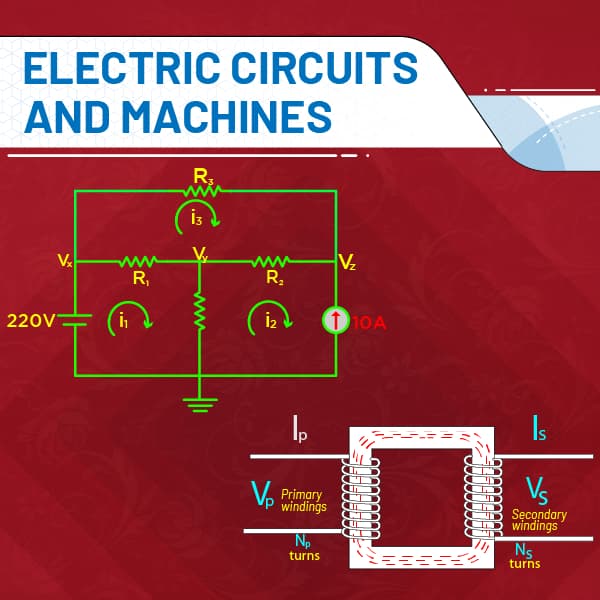
Electric Circuits and Machines, Bachelor of Engineering(BE) videos according to syllabus of Institute Of Engineering(IOE), Tribhuvan University (TU)

Intermediate
5.0 (2 reviews)
250+ Students Enrolled Nepali Updated Oct 2024

What you'll learn

After the completion of this course, students will get the complete knowledge of Electric Circuits and Machines.
Course Curriculum 10 Sections • 154 Lectures
Free Preview Available: Watch "0. How to Purchase Course from MeroSchool.mp4" before enrolling.
0. How to Purchase Course from MeroSchool.mp4 Free Preview
00:03:30
1. Contents of Network Analysis of AC Circuit and Dependent Sources.mp4 Free Preview
00:04:49
2. Introduction & Sources of Electrical Network.mp4 Free Preview
00:07:38
3. Nodal Analysis (Type I).mp4 Free Preview
00:11:24
4. Nodal Analysis( Type II).mp4
00:04:44
5. Nodal Analysis (Type III).mp4
00:07:26
6. Nodal Analysis (Type IV).mp4
00:04:44
7. Nodal analysis (Numerical Example-1).mp4
00:05:53
8. Nodal analysis (Numerical Example-2).mp4
00:04:36
9. Nodal analysis (Numerical example-3).mp4
00:08:20
10. Mesh Analysis (Type I).mp4
00:12:37
11. Mesh Analysis (Type-II).mp4
00:07:48
12. Mesh Analysis (Type III).mp4
00:04:27
13. Mesh Analysis (Numerical Example-1).mp4
00:06:50
14. Mesh Analysis (Numerical Example-2).mp4
00:06:37
15. Mesh Analysis (Numerical Example-3).mp4
00:05:31
16. Resonance in Series RLC Circuit.mp4
00:22:27
17. Resonance in Series RLC Circuit (Numerical example-1).mp4
00:04:22
18. Resonance in Series RLC Circuit( Numerical example-2).mp4
00:06:27
19. Resonance in Parallel RLC Circuit.mp4
00:13:30
20. Parallel RLC Circuit(Numerical Example).mp4
00:06:35
1. Introduction of Initial Condition.mp4
00:11:55
2. Initial Condition For Inductor.mp4
00:11:25
3. Initial Condition for Capacitor.mp4
00:13:27
4. Voltage Current Relationship Of Different Circuit Element.mp4
00:05:05
5. Numerical Example-1.mp4
00:09:52
6. Numerical Example-2.mp4
00:18:01
7. Numerical Example-3.mp4
00:15:51
8. Numerical Example-4.mp4
00:05:47
9. Numerical Example-5.mp4
00:13:51
10. Numerical Example-6.mp4
00:09:10
11. Numerical Example-7.mp4
00:08:30
12. Numerical Example-8.mp4
00:16:26
13. Numerical Example-9.mp4
00:12:28
1. Contents.mp4
00:06:07
2. Introduction.mp4
00:09:21
3. Solution Techniques of Differential Equations.mp4
00:11:33
4. R-L Series Circuit with DC Excitation.mp4
00:07:25
5. Response of RL Circuit with DC Excitation (example-1).mp4
00:08:49
6. Response of RL Circuit with Exponential Excitation.mp4
00:14:09
7. RL Circuit with Exponential Excitation (example-2).mp4
00:09:53
8. RL Circuit with Sinusoidal Excitation(example-3).mp4
00:13:49
9. RC Circuit with DC excitation.mp4
00:05:08
10. RC Circuit with Exponential Excitation.mp4
00:14:14
11. RC Circuit with Exponential Excitation (example-4).mp4
00:12:49
12. RC Circuit with Sinusoidal Excitation.mp4
00:12:41
13. RC Circuit with Sinusoidal Excitation(example-5).mp4
00:16:48
14. RLC Circuit with dc excitation.mp4
00:20:01
15. RLC Circuit (example-6).mp4
00:13:33
16. RLC Circuit (example-7).mp4
00:12:19
17. RLC Circuit (example-8).mp4
00:21:46
18. RLC Circuit (example-9).mp4
00:16:44
19. RLC with Sinusoidal Excitation (example-10).mp4
00:20:09
20. RLC Circuit (example-11).mp4
00:07:01
21. RLC Circuit Example-12.mp4
00:09:29
22. RLC Circuit Example-13.mp4
00:13:24
23. RLC Circuit example-14.mp4
00:22:57
1. Introduction.mp4
00:03:38
2. Some Important Formula.mp4
00:05:13
3. Steps for Solving any Circuit by Laplace Transform.mp4
00:04:22
4. Partial Fraction Expression.mp4
00:10:49
5. Numerical example-1.mp4
00:09:18
6. Numerical example-2.mp4
00:07:51
7. Numerical example-3.mp4
00:12:41
8. Numerical example-4.mp4
00:07:03
9. RC Circuit (Numerical example-5).mp4
00:09:32
10. RLC Circuit (Numerical example-6).mp4
00:14:59
11. RLC Circuit (Numerical Example-7).mp4
00:14:37
12. RL Circuit (Numerical example-8).mp4
00:10:45
13. Numerical example-9.mp4
00:24:15
14. Numerical example-10.mp4
00:09:41
15. Numerical example-11.mp4
00:09:17
16. Numerical example-12.mp4
00:09:36
1. Contents.mp4
00:05:31
2. Introduction.mp4
00:14:50
3. Z-parameters Calculation.mp4
00:07:22
4. Y-parameters Calculation.mp4
00:06:17
5. T-parameters Calculation.mp4
00:07:36
6. T'-Parameters Calculation.mp4
00:06:01
7. h-parameters calculation.mp4
00:05:45
8. g-parameters calculation.mp4
00:07:02
9. Condition for Reciprocity of Two Port Network.mp4
00:25:16
10. Interconnection of Two port Network (Series).mp4
00:12:48
11. Interconnection of Two Port Network (Parallel).mp4
00:12:06
12. Interconnection of Two Port Network (cascade).mp4
00:09:37
13. Relationship Between Parameters.mp4
00:19:21
14. Numerical Example 2.mp4
00:21:34
15. Numerical example 3.mp4
00:16:39
16. Numerical Example 4.mp4
00:13:43
17. Numerical Example 5.mp4
00:13:50
18. Numerical example 6.mp4
00:17:13
19. Numerical example 7.mp4
00:13:37
1. Magnetic Circuits and its Types.mp4
00:33:05
2. B-H Relationship and Hystereisis with DC Excitation.mp4
00:26:33
3. Hysteresis with AC Excitation - Hysteresis Loss and Eddy Current Loss.mp4
00:17:09
4. Faraday's Law of Electromagnetic Induction , Statically and Dynamically Induced EMF.mp4
00:11:03
5. Force on Current Carrying Conductor - Expression for Self Inductance.mp4
00:10:03
6. Numerical 1 (2076 Baisakh).mp4
00:18:32
7. Numerical 2 (flux calculation in the core having multiple windings.mp4
00:15:30
8. Numerical 3 (Parallel magnetic circuit).mp4
00:20:20
9. Numerical 4 (2069 - ring related).mp4
00:08:30
10. Numerical 5 (2073 Magh - ring related).mp4
00:12:05
11. Numerical 6 (2069 Bhadra- self inductance).mp4
00:06:32
1. Construction, Operating Principle and EMF Equation of Single Phase Transformer.mp4
00:21:49
2. Mutual Inductance and Coupled Circuit Model.mp4
00:07:03
3. No Load and Load Operation of Transformer.mp4
00:16:45
4. Equivalent Circuit Diagram of Transformer (Detail).mp4
00:32:39
5. Capacity of Transformer - Exciting Current Harmonics - Transformer Inrush Current.mp4
00:14:15
6. Transformer Testing (Polarity test).mp4
00:07:32
7. Transformer Testing ( No Load or Open Circuit test ).mp4
00:23:22
8. Transformer Testing (Short circuit test).mp4
00:23:22
9. Voltage Regulation.mp4
00:27:43
10. Losses , Efficiency and Condition for Maximum Efficiency in a Transformer.mp4
00:20:13
11. Instrument Transformer (current transformer & potential transformer).mp4
00:15:35
12. Auto Transformer (Construction , working principle & Cu saving).mp4
00:17:15
13. Numerical 1 (2076 Baisakh - step up transformer testing.mp4
00:30:52
14. Numerical 2 (2072 Magh - step down transformer testing).mp4
00:27:16
15. Numerical 3 (2073 Bhadra - efficiency related).mp4
00:12:41
16. Numerical 4 (2073 Magh - efficiency related).mp4
00:07:10
17. Numerical 5 (2071 Magh - efficiency related).mp4
00:13:06
18. Numerical 6 (2070 magh).mp4
00:09:26
19. Numerical 7 (2069 bhadra - efficiency related).mp4
00:20:01
1. Constructional details of DC Machine and Armature Windings.mp4
00:14:18
2. Operating Principle and EMF Equation of DC Generator.mp4
00:35:46
3. Operating Principle and Torque Equation of DC motor.mp4
00:48:06
4. Back EMF and its Role in DC Motor.mp4
00:15:23
5. Types of DC Motor and Performance Characteristics of DC motor.mp4
00:38:17
6. Starting of DC Motors ( 3 point and 4 point starters).mp4
00:24:59
7. Speed Control of DC shunt motor.mp4
00:28:01
8. Speed Control of DC Series Motor.mp4
00:23:46
9. Losses, Efficiency and Voltage Regulation in DC Generator.mp4
00:03:28
10. Numerical 1 (2076 Baisakh - short shunt and long shunt compound dc generator).mp4
00:54:11
11. Numerical 2 (2075 Bhadra - dc shunt generator).mp4
00:20:56
12. Numerical 3 (2076 Baisakh - dc shunt motor).mp4
00:23:05
13. Numerical 4 (2075 Bhadra - dc shunt motor).mp4
00:17:06
14. Numerical 5 (2073 Magh - dc shunt motor).mp4
00:14:52
15. Numerical 6 (2075 Baisakh - dc series motor).mp4
00:11:55
16. Numerical 7 (2066 Magh - dc series motor).mp4
00:13:56
1. Construction and Operating Principle of Three Phase Induction Motor.mp4
00:34:33
2. Torque Equation of Three Phase Induction Motor at Standstill and Running Condition.mp4
00:21:22
3. Torque Slip Characteristics , Condition for max. torque & effect of rotor resistance on torque slip characteristics.mp4
00:28:14
4. Single Phase Induction Motor.mp4
00:05:28
5. Double Field Revolving Theory.mp4
00:17:23
6. Starting of Single Phase Induction Motor.mp4
00:06:13
7. Capacitor Start Motor.mp4
00:04:36
8. Capacitor Run Motor.mp4
00:03:15
9. Capacitor Start and Run Motor.mp4
00:05:21
10. Shaded Pole Motor.mp4
00:03:12
11. Single Phase Synchronous motor.mp4
00:04:40
12. Hysteresis Motor.mp4
00:05:10
13. Universal Motor.mp4
00:08:19
14. Stepper Motor.mp4
00:12:53
15. Servo Motor.mp4
00:09:16
16. Schrage Motor.mp4
00:03:36

Requirements

  • Students are required to have knowledge of knowledge of Electrical Machine and Electric Circuit Theory, based on syllabus of IoE

Course Description

The videos herein are strictly based on syllabus of Institute of Engineering Tribhuvan University, Nepal promoting "e-Learning in Nepal" and are made with intention to provide guidance to the "Bachelor in Engineering(BE) appearing students", for securing good results. The course tries to cover all the lessons of Electric Circuits and Machines with solution of most frequently asked questions in final exam of BE with fundamental theories and numerical solutions. We strongly believe that, viewers will be benefited from these videos and the thirst of curiosity of viewers will be quenched! Feedbacks and suggestion to improve are always welcome and highly appreciated!

Instructor

M
Mero School Academic Team

Senior Academic Instructor • Mero School E-Learning